So no blog post yesterday. I could say that we were deliberately leaving our first flavour profiles to ferment a little longer, but in truth it is just that life sometimes gets in the way of having fun.
Today, we are back to tasting. I also had my first Covid vaccination today, so it will be interesting to see the effect of drinking neat alcohol on top of this!
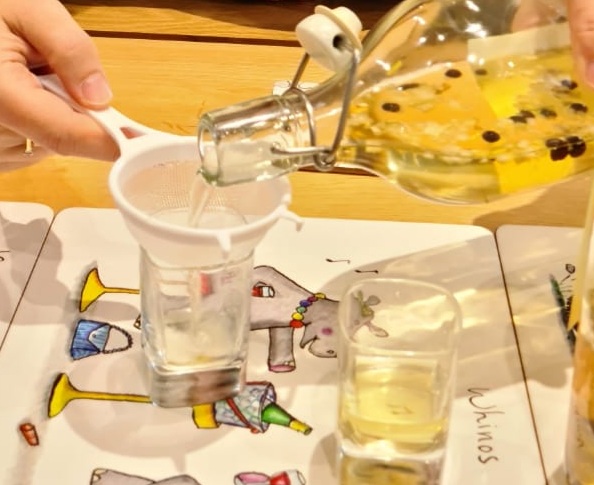
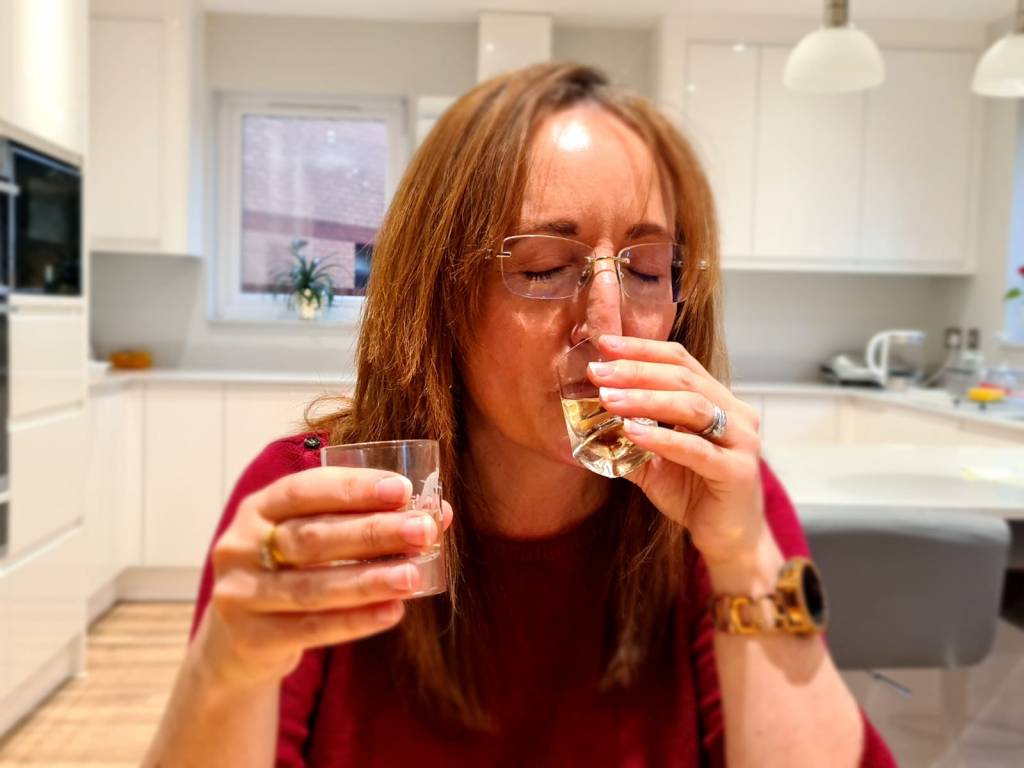
Firstly, another sample of both the darker (slightly crushed juniper) and the light (juniper simply added to the bottle). Interesting to see if the taste has changed much after another 2 days left fermenting with the berries in. Result: not really. The darker still has a stronger aroma and is smoother to taste, but also more of a ‘burn’ down the back of your throat. The lighter has a slightly bitter aftertaste and still an underlying hint of the vodka from which it evolved. But no difference to tasting them 2 days ago. So we removed the juniper berries from both samples, as it appears they have done their job.
Of course we don’t usually sit of a Saturday night (or any other night for that matter) socially drinking neat gin. For me, that would be something akin to torture (see blog post 2…!) and I would spend more of the evening ‘talking on the great white telephone’ than I would socialising. So at this point I bow down to the great and the good who had the good sense and creativity to find a useful purpose for quinine: Tonic.
Our mixer of choice for your typical London Dry gin tends to be Fever Tree light tonic water. We’ve been to a gin tasting evening and a huge arena Gin Show where we’ve sampled – many times – the delights and differences (sometimes subtle, sometimes great chasms) between different tonics, so we don’t intend to start that debate again here. And of course there’s those who don’t like tonic at all and go for lemonade etc. (I know 2 people with very discerning palates who thought they hated gin with a passion, until they actually realised it is the flavour of tonic that they have the aversion to.) But for the purposes of today’s taste testing, we stuck with the old familiar.
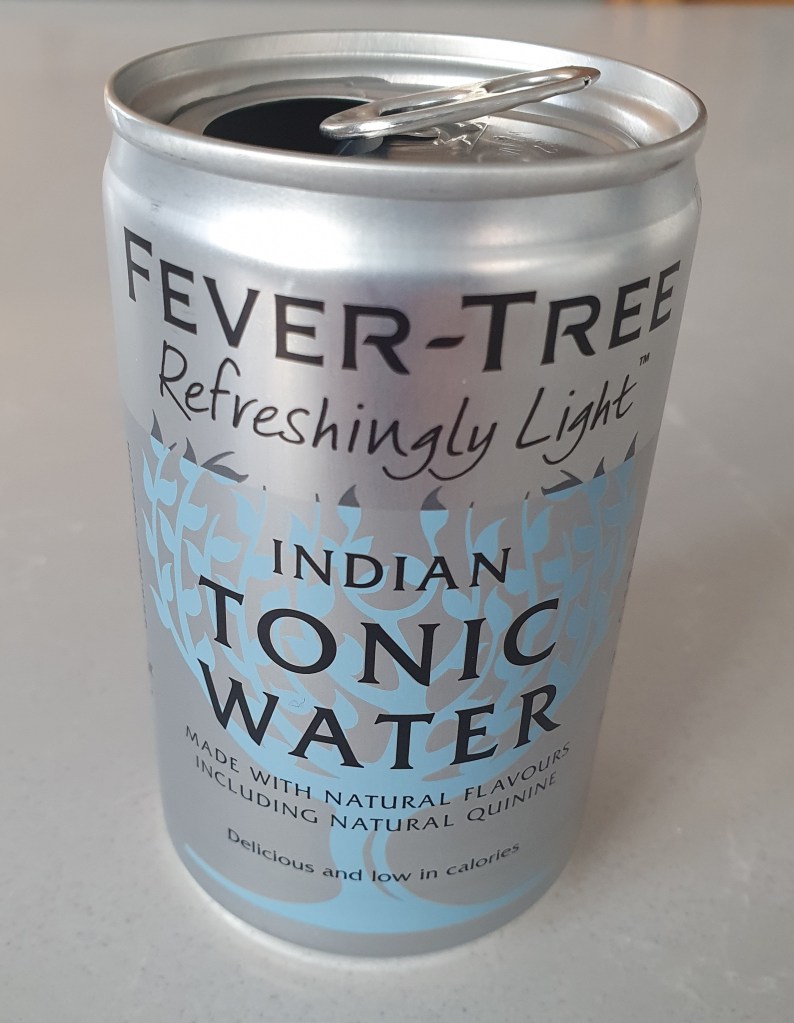
On adding tonic to both the light and dark samples, it instantly (for me at least) begins to taste infinitely more palatable and familiar. The darker gin though, definitely still has more of a preferable taste. Just more taste full stop really. The lighter is predominantly just the flavour of tonic. So there we have it, Test 3: If attempting to make a straight dry gin, the juniper berries slightly crushed gives a better result.
We’re both excited now to try our first 2 attempts at flavoured gins: Rhubarb & Ginger, and Chocolate Orange.
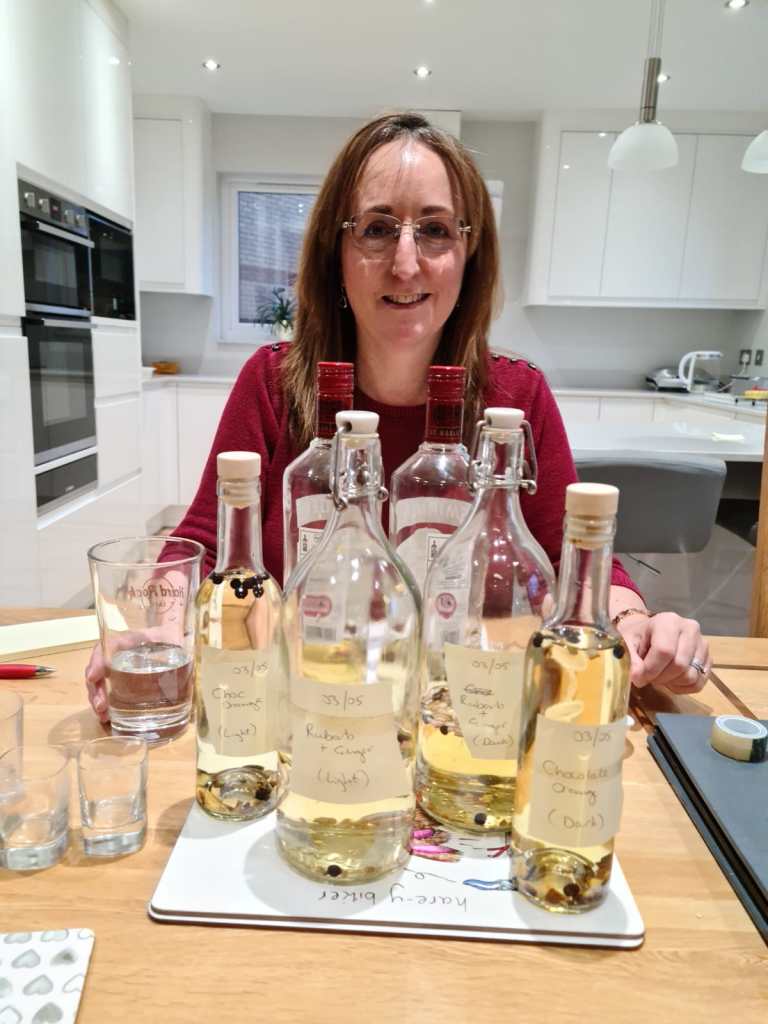
If you remember, we tried the 2 flavours with both the lighter and the darker gin mixes, to identify any difference. The results are surprising.
Firstly, the Rhubarb & Ginger. OK, so the balance of flavours aren’t right yet, but we can cut ourselves a little slack on that as it is only the first attempt.We both tasted ginger, but no rhubarb. But of the light and darker samples, the darker Rhubarb & Ginger was overpowered by the stronger taste of juniper, losing the subtle flavours underneath. In the lighter Rhubarb & Ginger, the smell and the flavour of the ginger was clearly there.
On to the Chocolate Orange. Interestingly, when neat, neither of us could taste or smell very much at all, perhaps just a slight whiff of orange from the light gin mix. However, when mixed with tonic, I could more clearly smell and taste the orange – in both, but especially in the light gin mix. Hubbie was not so convinced, but then again it has been a recurring topic of conversation throughout our marriage that his sense of smell is, frankly, rubbish.
Of the chocolate though (we used cacao nibs) there was nothing. Nada. Nichts. And for us both as huge chocolate lovers, how disappointing. So on this mix at least, we’ve decided to keep the rest of our cacao nibs for another day.
The best discovery of the day is that when making a simple dry gin, the sample with the slightly crushed juniper (the darker one) tastes superior. But for both flavoured samples, the underlying taste of juniper was too overpowering in the darker gin mix, and the lighter one was much better – allowing the flavours to come through. Therefore decision made. Test 4: for flavoured gin, use the lighter gin mix.
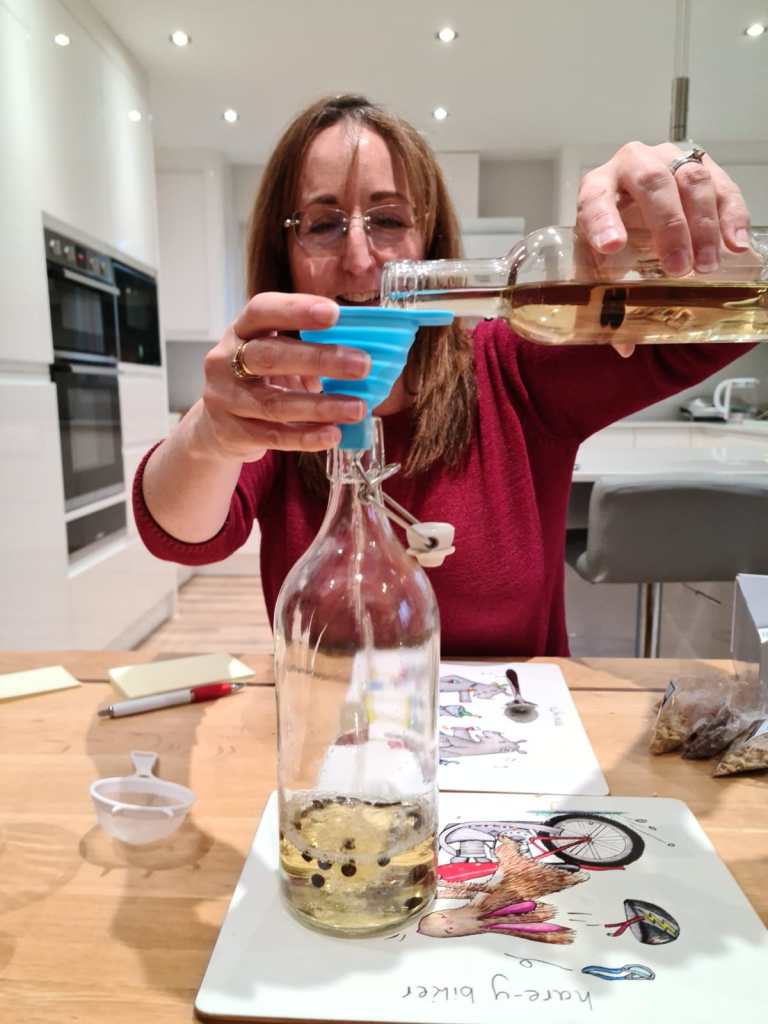
To attempt to improve our first 2 flavours, we have added more rhubarb to the darker Rhubarb & Ginger, and more orange peel to the darker Chocolate Orange. In a couple of days we can then compare again the lighter (currently preferred) versions with the ‘Take 2’ enhanced (darker) versions.
To finish off today, having made the decision that the darker of the 2 base samples on its own is preferable, we’ve now combined the lighter and darker base gins into 1 bottle. We’ve kept some back as a tasting sample, and to the remaining 350ml we are attempting flavour profile 3 – Raspberry & Hibiscus. 1 fairly large dried Hibiscus flower, some freeze dried Raspberry and 5 fresh raspberries later, and we have some pink mush in a bottle.
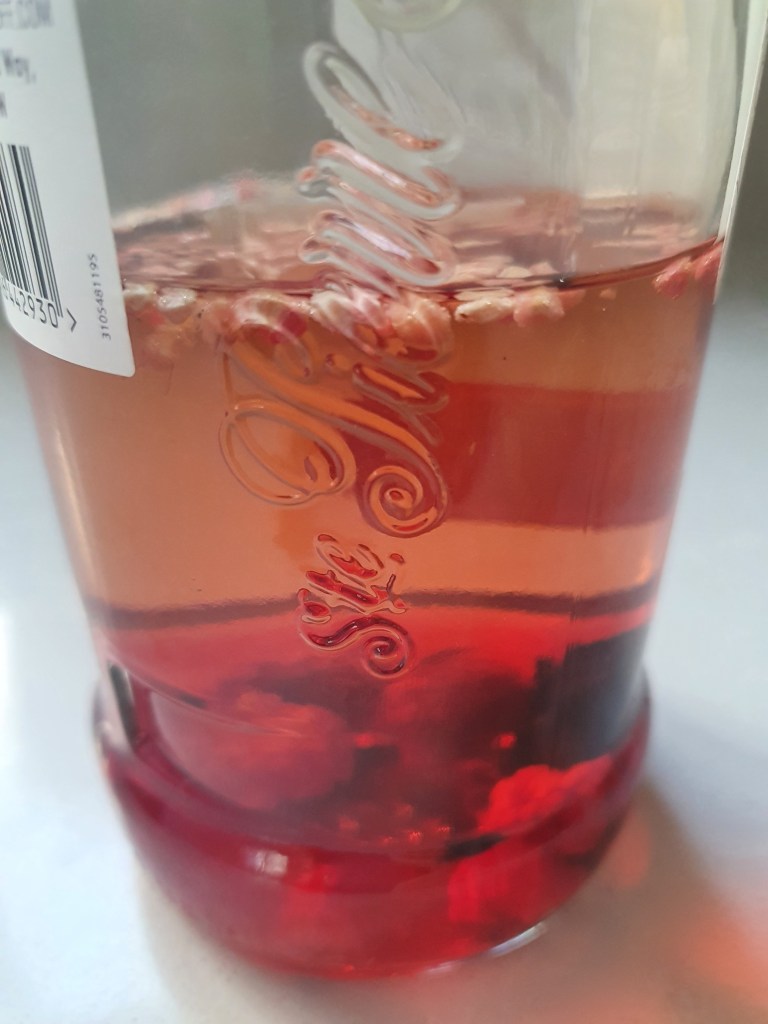
We now have 6 half-bottles of gin, of various concoctions, sitting in the corner of the kitchen worktop. We hope they are working their magic. Otherwise they may all end up in the bin and we’ll start again. Who knows? We’ll let you know in a couple of days.
Hubbie’s comment of the evening is that he thinks our new hobby may become very expensive. And we all know how typical Scotsmen feel about that!
And in case you’re wondering about the after-effects of gin tasting and Covid injections? So far, a clear head, but a slightly dead arm. And I don’t think even I can blame gin for that.
 Diary Of A Novice Gin Maker